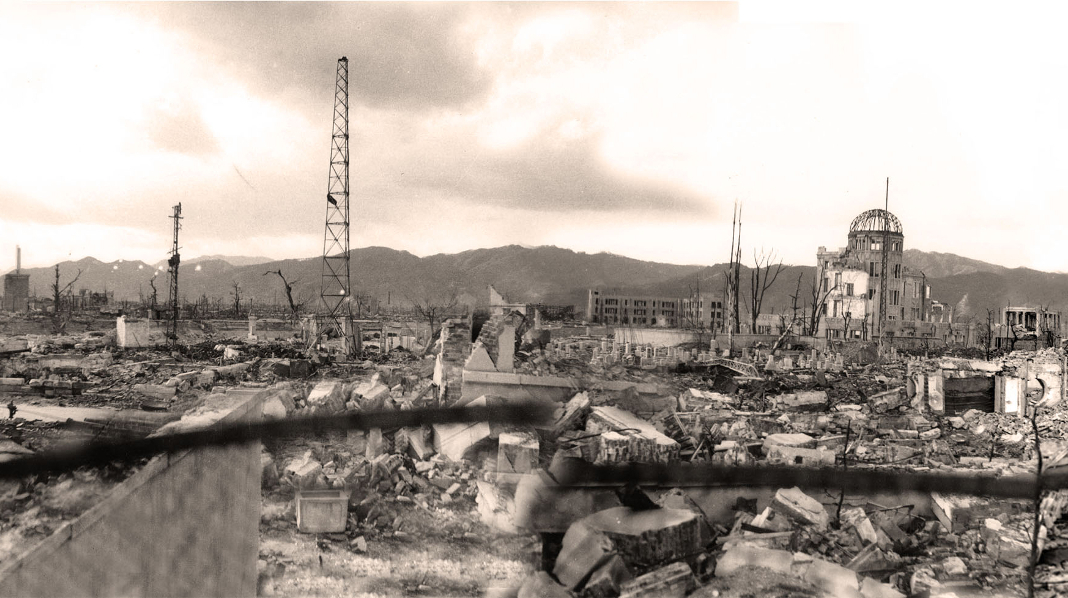
Nuclear weapons – deterrence or threat?

Nuclear weapons are classified as weapons of mass destruction owing to their capacity of unlimited destruction, instant annihilation, and long-term consequences of ionizing radiation.[1] All life on Earth can be destroyed if a sufficient amount of nuclear weapons are used.[2] Besides, radiation from nuclear explosions causes long-term health effects such as cataracts, leukaemia, birth defects, and genetic damage. Although many attempts (General Assembly Resolutions, treaties, national court judgments) have been taken to contain nuclear weapons, there has yet to be a consensus on the legality of the use, threat to use, or even the existence of nuclear weapons themselves. The International Court of Justice (ICJ) has ruled that treaties relating to weapons of mass destruction do not ban recourse to nuclear weapons, and that the international community has yet to produce a treaty that specifically prohibits the use of nuclear weapons.[3] This essay takes the stance that the use of nuclear weapons is not illegal, at least not yet. Instead of focusing on the legality of nuclear weapons, emphasis should be placed on the efforts trying to deter the use and proliferation of nuclear weapons. This essay also supports the principle of deterrence. The first part of the essay will discuss the legality of nuclear weapons. Next, every argument put forth regarding the illegality of the use of nuclear weapons will be disproved. Evaluation of the loopholes in the current regulatory framework will also be carried out. The following part will be a critical analysis on the ethical and moral framework against nuclear weapons. Arguments for nuclear weapons will follow. Lastly, a conclusion will be provided.

           Upon request from the UN General Assembly, the ICJ contributed to the international community’s divide over the legality of the use of nuclear weapons and issued an advisory opinion. The conclusion reached was a ‘general’ incompatibility with humanitarian law, and a non liquet on the use of nuclear weapons during self-defence.[4] The ICJ’s non-pronouncement leaves open, the possibility that use of nuclear weapons contrary to humanitarian law might nonetheless be lawful.[5] This is a strange outcome which goes beyond anything claimed by the nuclear-weapon states appearing before the Court, who fully accepted that any lawful threat, or use of nuclear weapons must comply with both the jus ad bellum, and the jus in bello criteria.[6] The current legal regulations available are fragmentary, with several treaties and customary international law covering only certain areas of the issue. Without a comprehensive instrument governing all activities involving nuclear weapons, the relevant laws applicable need to be scrutinised one by one.

Treaties

No single treaty explicitly prohibits the use of nuclear weapons. Hence, numerous treaties circumscribe aspects of the use, acquisition, possession, deployment, and testing of nuclear weapons.

(a) Treaty on the Non-Proliferation of Nuclear Weapons (NPT)

      Contracting parties agreed to prohibit the direct or indirect transfer of nuclear weapons bythe ‘haves’(the five), and forbid the receipt, or manufacturing of nuclear weapons bythe ‘have nots’ (states who do not formally possess nuclear weapons).[7] The NPT allows peaceful nuclear testing as long as the information obtained is accessible by non-nuclear weapons states.[8] It also exacts a commitment by contracting states to pursue food faith negotiations towards nuclear disarmament.[9] However, the treaty does not punish or sanction violators of the treaty obligations.[10] This results in problems of non-compliance. In the 1995 NPT extension, the five nuclear powers provided security assurances to refrain from using nuclear weapons against the non-nuclear weapons states, who are parties to the NPT.[11]

(b) Nuclear Weapon-Free Zone

      There are various treaties creating nuclear weapons-free zones, such as the Southeast Asia Treaty,  Antarctic Treaty, Treaty of Tlatelolco, Treaty of Rarotonga, Outer Space Treaty, and the Seabed Treaty. In these treaties, contracting parties mainly declare their territories as being free from all aspects of nuclear weapons. These include nuclear testing, stockpiling, or the dumping of radioactive waste.[12]

Prohibitions Against the Use of Poison, Poisonous or Asphyxiating Gases

Article 23(a) of the Hague Regulations[13] and the Geneva Gas Protocol[14] prohibits the use of poison, poisonous and asphyxiating gases. Some scholars argued that these treaties should be applied to nuclear weapons because the effects of nuclear explosions are similar to the health effects caused by poison, poisonous and asphyxiating gases.[15] This is because they consider the effects of nuclear explosions and those of poisoned weapons and gases as functional equivalents, therefore, the conclusion that such a prohibition includes nuclear weapons.

Customary International Law and the Laws of War

Customary international law is a body of law which creates legal obligations that are binding on states in their international relations. This body of law derives from various sources: treaties, customs and universally recognised principles of law. Since no treaty specifically prohibits the use of nuclear weapons, and taking into account nuclear policies in states like the UK and the U.S, it is very likely that customary international law does not contain a per se prohibition against nuclear weapons use.[16] Legal scholars rely on positivist notions of state sovereignty, which states that international law will only consist of rules to which states have expressly or implicitly consented to.[17] The laws of war establish restrictions on the conduct of hostilities, and seek to balance the necessities of war with humanitarian principles.[18] These humanitarian principles include:

(a) prohibition against unnecessary suffering

     The ICJ defined ‘unnecessary suffering’ as a harm greater than that inevitable to achieve legitimate military objectives.[19] Nuclear weapons are said to violate this principle because their destructive powers cannot be contained either in space, or in time. Furthermore, the radiation released by a nuclear explosion will have negative effects on peoples’ health, agriculture, natural resources and demography.[20] These harms also constitute a serious danger to future generations.[21] The use of nuclear weapons are said to uselessly aggravate the suffering of the enemy, and even civilians, because it involves a force more than necessary to weaken the opponent’s military forces.[22] This argument is strengthened by the fact that a weakening of the enemy forces can be attained using conventional weapons. An opportunity to review such a breach of humanitarian law was presented before the Tokyo District Court. The court, in reviewing the atomic bombings of Hiroshima and Nagasaki, found that the States violated international law because of the use of nuclear weapons which caused unnecessary suffering.[23]

(b) prohibition against indiscriminate attacks

      This prohibition is set forth in Article 48 of Additional Protocol I[24], requiring conflicting parties; to distinguish at all times between civilian population and combatants, and between civilian objects and military objectives, and also to direct their operations accordingly against military objectives only. According to Article 51, indiscriminate attacks include the targeting of non-specific military objectives, using means or methods of warfare that are not directed at a specific military target or those that affect areas outside the zone of warfare.[25] A grave breach of the Additional Protocol is a war crime[26] and such breaches will be committed if states engage in indiscriminate attacks against the civilian population, and/or civilian objects. Nuclear weapons are indiscriminate per se, because of the indiscriminate destruction they cause. The radiation resulting from nuclear explosions is uncontrollable and can potentially damage civilians and their properties.

(c) principles of proportionality, distinction, and precaution

      The principle of proportionality requires that any incidental loss of civilian lives; injury or damage should not be excessive in relation to the concrete and direct military advantage anticipated. The principle of distinction was first set forth in the St. Petersburg Declaration[27], stating that the weakening of the opponent’s military forces should be the only legitimate objective during war. Hence, the distinction between civilians and combatants, and civilian objects and military objectives must be borne in mind at all times. During war, constant care and precaution must be taken to spare the civilian population and objects to prevent unnecessary suffering.[28] Again, the use of nuclear weapons is argued to fail in distinguishing between combatants and non-combatants because civilians outside war zones might still suffer injuries due to the unpredictable and uncontrollable effects of nuclear explosions. Precaution is difficult because the effect of nuclear weapons cannot be contained in both space, and time. The destruction caused by nuclear explosions is also disproportionate as it inflicts unnecessary suffering upon the opponent, destroy natural resources, and damage the environment.

            This section will disprove each of the above argument and provide evidence as to how customary international law in reality, does not prohibit the use of nuclear weapons. Even though nuclear weapons are said to be prohibited per se, there are still ways to circumvent the various legal mechanisms and thus, render their use legal.

The prohibition of unnecessary suffering can be justified by the doctrine of military necessity.[29]   States can only weaken their opponent through zones of military operations and hence, non-combatants within those zones knowingly expose themselves and their property to the hazards of warfare. Moreover, the strategic use of nuclear missiles designed for accuracy will lower the possibility of the destruction of an entire civilian population because states can target specific military objects.[30] The likelihood of unnecessary suffering is further reduced when military objects are located in remote areas.

The prohibition on the use of poison, poisonous and asphyxiating gases does not include nuclear weapons. The ICJ ruled that the aforementioned treaties never indicated that nuclear weapons fall within their prohibitions.[31] Furthermore, nuclear weapons destroy their targets instead of poisoning and asphyxiating targeted victims through the diffusion of gases.

 The ICJ has ruled that agreements prohibiting the use of nuclear weapons in nuclear-free zones do not negate the fact that nuclear-weapon states reserve the right to use such weapons, particularly in self-defence.[32] While Article 2(4) of the UN Charter refrains states from threatening or using force against other sovereign states, Article 51 allows the use of force as self-defence, subject to the Security Council’s authorisation.[33] During self-defence, states need to adhere to the principles of proportionality and distinction.[34] Hence, states are arguably, allowed to use nuclear weapons in self-defence as long as they satisfy the requirements of necessity and proportionality. Developments in nuclear weapons technology (see above) helped increase the likelihood of states’ complying with Article 51. Although the non-recourse to nuclear weapons for over fifty years may show state practice, the strong adherence to the doctrine of deterrence on the part of the nuclear states indicates a lack of consensus, rendering it insufficient to constitute customary international law. Even if states resort to the NPT, there is no enforcement system to ensure that the ‘obligations’ are followed.

            Nuclear weapons are said to be inconsistent with humanity as they threaten the very survival of humanity. The impact of a nuclear explosive blast can cause catastrophic results due to its sudden change in air pressure. Scientific evidence stipulates a considerable change in the world’s climate, possibly lasting for years.[35] Worse still, nuclear war together with a nuclear winter could wipe out most lives in the northern hemisphere, and severely threaten life in the southern hemisphere.[36] Moreover, wind will carry the smoke and dust to countries that are not involved in the war.[37] This causes destruction to the world’s climate, peoples’ health, environment, natural resources, and even the economy. The use of nuclear weapons would also violate the right to life guaranteed by Article 2 of the European Convention of Human Rights.[38] At the substantive level, the provisions of human rights treaties might not add much to international humanitarian law. However, they contain unique mechanisms, relevant to enforcement, that are of great assistance at a procedural level.[39] The ICJ held that warring states need to take environmental considerations into account when assessing the necessary and proportional principles in the pursuit of legitimate military objectives.[40] Such a duty stems from customary law and general treaties on the environment rather than from the specific environmental provisions of the Additional Protocol I.[41]

            However, because there is precisely a fear towards the catastrophic effects of the use of nuclear weapons, states will need them to deter any potential aggressors. The doctrine of deterrence is used by the nuclear-weapon states to justify their weapons. The rationale behind this doctrine is that a nation will refrain from attacking another nation which has the ability to inflict unacceptable damage upon it. In other words, the threat of nuclear retaliation will deter potential aggressors. Proponents claim that it is responsible for the fact that there has been no war between the nuclear weapons states.[42] Nuclear technology is something that cannot be reversed. Such technology risks falling into the wrong hands, especially to terrorists. Instead of having detailed debates on ways to synchronize the laws, we should focus on addressing the problems of proliferation.[43] The question is not one of legal authority. Instead of continuing to have wishful thinking, hoping that somehow, shelter will be found from gathering threats, measures should be taken to prevent proliferation. Such a success can be seen in the Proliferation Security Initiative, proving that nuclear proliferation can actually be controlled as long as states can cooperate and work towards the same goal.[44] Unilateral disarmament, as proposed by Jeremy Corbyn, is extremely dangerous as it poses the risk of other nuclear-weapon states using their weapons against the UK. Unless a practical solution is created to ensure that all states disarm (which is highly unlikely), it is overly naive to disarm unilaterally. Instead, precautions should be carried out to prevent accidents from happening at a nuke base.

            As a conclusion, there are too many difficulties in trying to come up with a convention or treaty that prohibits the use of nuclear weapons. Even if such conventions or treaties can be created, it is highly doubted that they can effectively safeguard against the use of nuclear weapons (as can be seen in failed efforts of the Kellogg-Briand Pact). Instead, efforts should be put into preventive measures to deter the use of nuclear weapons, and into strengthening the non-proliferation regime. Time should not be wasted in debates concerning the legality of nuclear weapons. This is because, even if such weapons are prohibited, there will be further issues of accountability. What will be the use of holding the belligerents accountable after serious damage has been done? Hence, we should try to focus on practical solutions of non-proliferation and try to deter the use of nuclear weapons. Nuclear-weapon states should also think carefully before using their weapons to prevent catastrophic consequences. No room will be left for regret when irreversible damage is done. To quote Hayao Miyazaki, ‘no matter how many weapons you have, no matter how great your technology might be, the world cannot live without love’.

Bibliography

Books

Bailey K, Strengthening Nuclear Non-Proliferation (Westview Press 1993)

Brierly J, The Law of Nations (Humphrey Waldock ed, 6th edn, 1963)

Shaw M, Nuclear Weapons and International Law (Dartmouth Publishing1987)

Schwarzenberger G, International Law as applied by International Courts and Tribunals, Vol 2 (Stevens & Sons Ltd1968)

Yost D, Frances Nuclear Dilemmas (Standford University Press 1996)

International Legislation

Additional Protocol I & II

European Convention of Human Rights

Geneva Conventions

Geneva Gas Protocol

Hague Regulations

International Committee of the Red Cross

St. Petersburg Declaration

UN Charter

UNGA Res 3472B (1975) UN Doc A/10441

UNSC Res 984 (1995) SCOR Resolution 984

Journal Articles

Bolton J, ‘The Bush Administration’s Forward Strategy for Non-Proliferation’ (2005) 5(2) Chi J Int’L 395

Bugnion F, ‘The International Committee of the Red Cross and nuclear weapons: From Hiroshima to the dawn of the 21st century’ (2005) 87(859) International Review of The Red Cross 511

Çetiner Y, ‘Is Nuclear Deterrence Morally Acceptable?’ (1998) 3(1) Journal of International Affairs

Greenwood C, ‘The Advisory Opinion on nuclear weapons and the contribution of the International Court to international humanitarian law’ (1997) 316 International Review of the Red Cross

Grief M, ‘Legality of the Threat or Use of Nuclear Weapons’ (1997) 46 INT’L & COMP LQ 681

Moore J, ‘Nuclear Weapons and the Law: Enhancing Strategic Stability’ (1983) 9 Brook J Int’l L 263

Sagan C, ‘Nuclear War and Climatic Catastrophe: Some Policy Implications’, in Lester Grinspoon, The Long Darkness: Psychological and Moral Perspectives on Nuclear Winter (New York 1986)

Sheldon J, ‘Nuclear Weapons and the Laws of War: Does Customary International Law Prohibit the use of Nuclear Weapons in all Circumstances?’ (1996) 20(1) Fordham International Law Journal 5

Weston B, ‘Nuclear Weapons versus International Law: A Contextual Reassessment’ (1984) U.S. Air Force publication Special Edition No. 1094

Reports/Opinions

 R.F. Bacon, ‘Seizing the Strategic Baton’ (1992) US Naval Institue Proceedings

ICJ Advisory Opinion on the Legality of the Threat or Use of Nuclear Weapons, 1996

Judge Higgins, Threat or Use of Nuclear Weapons [1996] Dissenting Opinion

Table of cases

Military and Paramilitary Activities [1986] ICJ 1 176

Shimoda v. State (Japanese Government) [1964] Tokyo Dist. Ct

Treaties

 Treaty on the Non-Proliferation of Nuclear Weapons [1968]

Websites

UNODA, Nuclear Weapons

<http://www.un.org/disarmament/WMD/Nuclear/>


Footnotes

[1] François Bugnion, ‘The International Committee of the Red Cross and nuclear weapons: From Hiroshima to the dawn of the 21st century’ (2005) 87(859) International Review of The Red Cross 511.

[2] UNODA, ‘Nuclear Weapons’ <http://www.un.org/disarmament/WMD/Nuclear/> accessed 9 January 2016.

[3] ICJ Advisory Opinion on the Legality of the Threat or Use of Nuclear Weapons, 1996.

[4] Ibid.

[5] Threat or Use of Nuclear Weapons [1996] Dissenting Opinion of Judge Higgins.

[6] Ibid.

[7] Treaty on the Non-Proliferation of Nuclear Weapons [1968], Articles I & II.

[8] Ibid, Articles IV & V.

[9] Ibid, Article VI.

[10] Kathleen C. Bailey, Strengthening Nuclear Non-Proliferation (Westview Press 1993).

[11] UNSC Res 984 (1995) SCOR Resolution 984.

[12] UNGA Res 3472B (1975) UN Doc A/10441.

[13] Hague Regulations, Article 23.

[14] Geneva Gas Protocol.

[15] Malcolm N. Shaw, Nuclear Weapons and International Law (Dartmouth Publishing1987).

[16] John Norton Moore, ‘Nuclear Weapons and the Law: Enhancing Strategic Stability’ (1983) 9 Brook J Int’l L 263.

[17] James L. Brierly, The Law of Nations (Humphrey Waldock ed, 6th edn, 1963).

[18] Georg Schwarzenberger, International Law as applied by International Courts and Tribunals, Vol 2 (Stevens & Sons Ltd1968).

[19] Ibid (n 3).

[20] Ibid (n 3).

[21] Ibid

[22] Nicholas Grief, ‘Legality of the Threat or Use of Nuclear Weapons’ (1997) 46 INT’L & COMP LQ 681.

[23] Shimoda v. State (Japanese Government) [1964] Tokyo Dist. Ct.

[24] Additional Protocol I, Article 48.

[25] Ibid, Article 51.

[26] David S. Yost, France’s Nuclear Dilemmas (Standford University Press 1996) 108.

[27]St. Petersburg Declaration, Preamble.

[28] ICRC Cil, Rule 15.

[29] Burns H. Weston, ‘Nuclear Weapons versus International Law: A Contextual Reassessment’ (1984) U.S. Air Force publication Special Edition No. 1094.

[30] R.F. Bacon, ‘Seizing the Strategic Baton’ (1992) US Naval Institue Proceedings.

[31] Ibid (n 3).

[32] Ibid (n 3).

[33] UN Charter, Articles 2(4) & 51.

[34] Military and Paramilitary Activities [1986] ICJ 1 176.

[35] Y. Turan Çetiner, ‘Is Nuclear Deterrence Morally Acceptable?’ (1998) 3(1) Journal of International Affairs.

[36] Ibid.

[37] Carl Sagan, ‘Nuclear War and Climatic Catastrophe: Some Policy Implications’, in Lester Grinspoon, The Long Darkness: Psychological and Moral Perspectives on Nuclear Winter (New York 1986).

[38] European Convention of Human Rights, Article 2.

[39] Christopher Greenwood, ‘The Advisory Opinion on nuclear weapons and the contribution of the International Court to international humanitarian law’ (1997) 316 International Review of the Red Cross.

[40] Ibid.

[41] Ibid.

[42] Jill M. Sheldon, ‘Nuclear Weapons and the Laws of War: Does Customary International Law Prohibit the use of Nuclear Weapons in all Circumstances?’ (1996) 20(1) Fordham International Law Journal 5.

[43] John R. Bolton, ‘The Bush Administration’s Forward Strategy for Non-Proliferation’ (2005) 5(2) Chi J Int’L 395.

[44] Ibid.
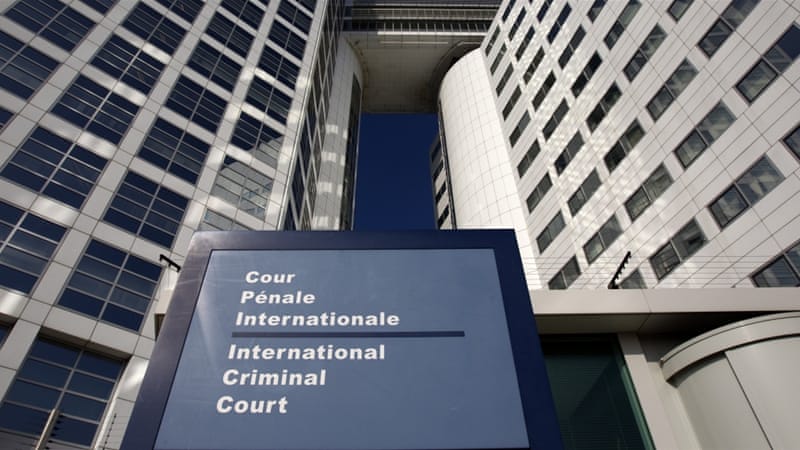
To what extent is the International Criminal Court neo-colonial and targeting Africans?

One of the most important developments in international criminal law is the establishment of a permanent, treaty-based International Criminal Court (ICC), derived from the Rome Statute. The ICC is established to investigate and try international offences, setting out a new code of international criminal law.[1] It should be noted that the ICC is not an organ of the Security Council (unlike the International Criminal Tribunals for the former Yugoslavia and Rwanda), nor is its character hybrid, similar to the Special Court for Sierra Leone and the Extraordinary Chambers in the Courts of Cambodia. The ICC is an independent court with jurisdictions over genocide, crimes against humanity, war crimes and the crime of aggression.[2] Despite having adopted the definition of the crime of aggression in Kampala, the Court can only exercise its jurisdiction over the crime until after the 1st of January, 2017, when States Parties will make a decision to activate the jurisdiction.[3] An important principle in this context is the complementarity principle. The ICC is intended to be a court of last resort, supplementing and complementing its Member States’ national criminal jurisdictions. Hence, Member States will have to make sure that they are able to prosecute all the crimes covered by the Rome Statute to prevent the Court from intervening. This principle is vital as it not only represents the Court’s respect for its Member States’ primary jurisdictions, but helps improve its efficiency in general. This is said so because national authorities usually have the best access to evidence and witnesses, and also the resources needed to carry out criminal proceedings.[4] Until now, 23 cases and 10 situations have been brought before the Court, with the majority focusing on crimes carried out in Africa. This situation has led to the argument that the ICC is neo-colonial and targets Africans. In this essay, an answer will be provided as to whether or not the Court is neo-colonial, and if so, to what extent. It will also evaluate whether Africans are being targeted by the ICC. First of all, the definition of ‘neo-colonialism’ will be defined, and the process for the initiation of an investigation will be briefly explained. Next, critical analysis will be carried out on arguments for and against the statement; that the ICC is neo-colonial and targets Africans. This essay takes the stance that while the ICC is subject, to a certain level, control by the powerful Western States, it cannot be said to be neo-colonial in nature, and it does not specifically target Africans. A conclusion will follow.

Neo-colonialism

            Neo-colonialism is argued to take the place of colonialism as the main instrument of imperialism in today’s world.[5] In essence, neo-colonial States are only independent in theory. The reality is that the ultimate control still lies in the hands of powerful States, and thus, rendering the neo-colonial States’ international sovereignty an illusion. While often used to describe economic exploitation[6], neo-colonialism in the context of the ICC is mainly related to the control of the Court by strong and influential States in the Security Council (arguably due to economic purposes at times). The main reason behind Africa’s displeasure with the ICC is the fact that the Court has been Afro-focused, and so far, only Africans are targeted for prosecution and consequently indicted. This is indicative of the Court’s bias against Africa. To understand why the ICC is said to be an agent of neo-colonialism, it is imperative to look at the legal procedure used by the Court to start an investigation.

Legal Procedure

            First of all, potential cases commence before the Court as ‘situations’, and they must undergo investigation to be pursued further. These situations can be referred to the Court through three ways:

(1) State Party referral[7]

      This usually occurs when the alleged crimes are committed:

      (a) within the State’s territorial boundaries;

      (b) the alleged offender, or victim is a national of the state; and

      (c) the State itself accepts that the Court has jurisdiction.[8]

The Office of the Prosecutor (OTP) will then carry out investigations regarding the situation so as to determine whether or not a crime has been committed under the Rome Statute.

(2) Proprio Motu investigations by the OTP[9]

      Such investigations can only be initiated once the OTP is satisfied that there are reasonable grounds to proceed based on reliable information about the alleged crimes within the Court’s jurisdiction. It must also notify the State that usually exercises jurisdiction over the alleged crimes about its intention to seek Pre-Trial Chamber’s authorisation. Subsequently, an application needs to be made to the Pre-Trial Chamber to obtain authorisation for the investigation to proceed.[10] Authorisation should be granted only when the State concerned is unable, or unwilling to conduct genuine investigations.[11] Once consent is obtained, the Prosecutor can proceed with investigations unless within a month; the State concerned informs the Prosecutor about its investigation on the matter in question, and requests for a deferral.[12] Some in-house strategy is also developed by the OTP to help guide the selection of cases, such as the impact of the crimes in the respective regions, their nature, and if the crimes fall within the Court’s jurisdiction.[13] This preliminary analysis phase is carried out before the investigative phase, and the result will determine the commencement of the cases.

(3) Security Council referral under Chapter VII of the Charter of the United Nations[14]

     While some argue that this process ensures a general position of neutrality, provides a wider scope during investigations, and prevents bias and politicisation of the complaints procedure[15], others argue that the Security Council does not represent the will of the wider community of States.[16] This is said so because the Security Council is strongly controlled and influenced by the permanent members, some of which are not even parties to the Rome Statute. Critics questioned the fairness and logic behind the ability of non-signatory States to dictate how affairs are to be conducted in the ICC.

These criticisms reflect an emerging trend where the dominance of global politics by several powerful States is increasingly questioned by developing nations. It is not difficult to understand opinions from African politicians and lawyers that the ICC is an agent of neocolonialism. They argue that the Court is being manipulated by the West and its allies to keep African countries compliant to their various dictates.[17] While African States contributed instrumentally to the establishment of the Court, the close association between both parties deteriorated especially after a warrant was issued by the ICC to arrest President Omar Hassan Ahmad Al Bashir of Sudan, an incumbent African head of State.[18] The fact that the African Union (AU) is of the opinion that the ICC is targeting Africans places the Court’s position and support at further risk because Africa has the highest regional representation to the Rome Statute.[19] Hence, the ICC has since been viewed as an instrument to destabilise the African continent, allowing powerful Western countries to further their political domination of Africa and the exploitation of minerals and resources.[20]

            Normally, a tribunal’s decision and performance are assessed based on legal considerations.[21] However, supranational adjudication is always impeded by political considerations because these supranational tribunals have to depend on the support and cooperation of States. The following sections will critically analyse both of the arguments, for and against, the statement that the ICC is neo-colonial and targets Africans. The arguments will be based on legal and political perspectives.

Proponents’ arguments: ICC is neo-colonial and targets African:

Afro-focused

      Situations that were successfully investigated by the ICC only consist of African cases (with the exception of Georgia).[22] For instance, the cases prior to the ICC constitute cases from Uganda, the Democratic Republic of Congo (DRC), the Central African Republic (CAR), and Mali, all of which are self-referred.[23] In addition, there are also cases from Sudan and Libya, referred by the Security Council.[24] Moreover, proprio motu authorised cases, such as those from Kenya and the Ivory Coast, are also African cases.[25] This results in tension between the AU and the ICC when taking into consideration other mass atrocities happening around the world. The fact that Africa was subject to a period of Western colonization adds to this argument. Consequently, the African countries (the AU in particular) seek to shake off Western control and demand for a wider stake in the international world order.[26] The AU’s position is significant in this context because the cases appearing before the ICC constitute mainly of African cases. While it cannot be considered to be an important power bloc, the AU has a crucial regional voice.[27] Inevitably, tension occurred as a result of the intersection between African geopolitical considerations and interest, with the goals of international criminal justice.

Conspiracy theory

      One of the prominent critics of the ICC[28]  described the Court as a fraudulent institution created; as a tool of neo-colonialism to target, specifically, poor African States. It is argued that international law aims to control poorer nations and that the ICC is used by Western powers to achieve this goal.[29] Mamdani puts forward the argument that the Court is politicised, and forms part of a wider, contemporary Western tool in place of traditional colonialism.[30] He is of the opinion that the global system is a bifurcated one, where State sovereignty is sacrosanct amongst developed nations, but is suspended in the poorer parts of the world.[31] These powerful Western States are said to manipulate the ICC as a tool to target Africans. They do so by labelling themselves as the protectors of international human rights[32], aiming to achieve global international criminal justice. Another theory is that the ICC constitutes a replica of the former process, whereby the West hides behind the heading of ‘international law’ to dominate Africa.[33] The Court has then been said to intentionally turn a blind eye to the atrocities committed by powerful Western regimes while openly targeting adversaries of those powerful nations.[34] If these theories were true, they will result in a possible negative effect as international justice can then be determined according to Western values and requirements, rather than by a set of objective principles.[35] This is dangerous as power will determine international relations, instead of the notion of equality. As can be seen in Libya, Syria, and Iraq, interventions took place in the name of international law when in fact; they were exercises of Western power, masquerading as humanitarian acts. In other words, international law is not defined in terms of what is just and conscionable. Rather, it is dictated by the powerful nations to fulfil their pragmatic and strategic requirements.

Intrusion of sovereign and functional immunity, and unfairness in the ICC process

      The issuance of an arrest warrant against the Sudanese sitting head of State Al Bashir is argued to amount to an intrusion of States’ sovereign immunity. The ICC is said to infringe customary international law by doing so; as it is customary law that serving heads of State should have sovereign immunity.[36] The functional immunity of state officials, and the notion that no state should be subject to laws in which it did not consent to are also seriously undermined.[37] Moreover, the fact that the Security Council can refer situations to the ICC caused anger among African States. This is because the Security Council is hugely influenced by its permanent members, some of which are not signatories to the Rome Statute, i.e., the United States. It is controversial because the powerful States can determine which situations should be referred to the Court without having their sovereignty ‘infringed’ as they are not placed under the Court’s direct jurisdiction. This is especially true for the permanent members as they have the power to veto situations they oppose.

            This section will address the arguments put forth above, and provide reasons as to why the ICC cannot be said to be neo-colonial and targets Africans.

Adversaries’ arguments: ICC is not neo-colonial and does not target Africans

Afro-focused or self-referrals?

      While it is true that almost all the ICC cases are African cases, the fact that a lot of them are self-referred should not be ignored. These African states (Uganda, DRC, CAR, and Mali, refer above) ought to bear significant responsibility as they were the ones who referred situations before the Court in order to try the alleged offenders for international crimes. Furthermore, the proprio motu Kenyan and Ivory Coast situations were in fact, initiated with the full support of the respective governments.[38] Instead of viewing the Court as targeting Africans, this essay is of the opinion that African countries are the ‘pioneers’ in utilising the Court to prosecute perpetrators of war crimes and crimes against humanity. African leaders and activists are building a system of international criminal justice through the Court, and their efforts should be seen as setting a good precedent for future referrals. It is especially true when the ICC, through the self-referrals of African States, successfully prosecute perpetrators of international criminal law. The situation allows the Court to build up its credibility as an effective international tribunal. Africa should instead, be seen as leading the adoption and implementation of the Rome Statute.[39] It is not too difficult to imagine that African States are more likely to utilise the Court for prosecuting perpetrators of international crimes because they played a major role in the establishment of the ICC itself (see above). Another important point to note is that the ICC, by ‘targeting’ African States, are actually working for, and helping the victims in that continent. If the Court must be said to ‘target’ Africa, it can also be said to help provide justice for African victims.[40] Besides, the Security Council referrals regarding Libya and Sudan are done lawfully under Chapter VII of the UN Charter (see above), and it is undeniable that war crimes and crimes against humanity happened in both situations, giving the Court its legitimate exercise of jurisdiction.[41] Africa needs to be viewed as a participant, and not a target.

Mere political outbursts or actual legal standards?

      The ‘conspiracy theory’ is arguably too general and it lacks concrete relevance to the argument it wishes to prove. Rather, it should be viewed as a political outburst as it fails to take into account the legal processes required of the ICC to confirm charges against suspects.[42] While the AU sees the Court’s prosecutorial decisions as politically motivated, it is undeniable that their displeasure with the Court has political motivations as well.[43] Even if it is insisted that the ICC is neo-colonial, the rigorous process involved during pre-trial proceedings and the strict judicial scrutiny regarding the Prosecutor’s power to commence investigations[44] renders the theory unconvincing.[45] This is because no case can be investigated, nor perpetrators be prosecuted, if war crimes and crimes against humanity did not exist in the first place. The Court’s decision on whether it should confirm charges must be based on legal standards as provided in the Rome Statute, which has also led to the refusal to confirm a number of indictments.[46] Moreover, the complementarity principle is accorded preference and respected as the Court is obliged to defer to the relevant national jurisdiction when required (see above). Of course, the above arguments have to be preceded by an independent and honourable group of judges.

Existing legal obligations and the role played by proprio motu investigations?

      While it is understandable that African States are dissatisfied with the power the Security Council has over the Court, it should not be forgotten that African States have existing legal obligations to accept and carry out the decisions of the Security Council.[47] In order for the Court to succeed, it is inevitable for the permanent members in the Security Council to take control of the ICC to a certain degree. This is an indisputable fact, and it is evidently being played out even in the United Nations itself. The support of the powerful States is crucial in aiding the success of the Court. Hence, instead of arguing that the ICC is neo-colonial, the focus should be on whether or not the Court does its job in prosecuting perpetrators of international crimes. Only when the ICC is established with a strong foundation, which takes time and evidences of successful cases, only then can it have more say when it comes to the selection of cases. As can be seen, the Prosecutor is currently actively seeking to initiate proprio motu investigations on States outside the African continent, such as Afghanistan, Colombia, Iraq, and Ukraine.[48] Even though it is difficult for such situations to be referred by the Security Council due to political reasons, the Court’s effort in trying to achieve international criminal justice outside Africa cannot be undermined. It is a fact that the ICC has been investigating African cases more than others. It is also indisputable that several non-African cases, i.e., Iraq and Venezuela, have been dropped. However, these decisions can be said to be directly related to the limited jurisdiction of the Court.[49] Regardless of the ICC’s intention to intervene in mass atrocities happening outside the African continent, its implementation is not without limits. A clear example will be Syria. The mechanisms (as mentioned above) for a situation to be investigated by the Court fail to give it jurisdiction over the mass atrocities committed in Syria. First of all, Syria is not a State Party to the Rome Statute.[50] This means that both self-referral and proprio motu investigations are not available options. Second, the Syrian situation cannot be referred to the Court successfully unless China and Russia do not veto the Security Council referral.[51] Another example will be Palestine. Palestine was not investigated by the ICC as it was not considered as a State and thus, was unable to address the Court.[52] A preliminary examination was opened after Palestine became a Member State to the Rome Statute.[53] Regarding the customary law immunity subject matter (see above), the counter-argument is that it is a requirement of international human rights law that all persons involved in the perpetration of human rights violations be held accountable.[54] Moreover, the Rome Statute also states that sovereign immunity cannot be relied on by State Officials.[55] If these are not sufficient, there has been contention that the obligation to prosecute perpetrators of mass atrocities has already attained the status of customary international law, overriding sovereign immunity.[56] Lastly, while it is true that serving heads of State enjoy general immunity from prosecution in foreign courts, international tribunals have the jurisdiction to try them.[57]

            In conclusion, the ICC cannot be said to be neo-colonial in nature, and it does not target Africans. While it is true that the Court is subject to certain limitations in its exercise of jurisdiction due to the permanent members’ veto power, this is insufficient to support the argument that the Court itself is neo-colonial. African countries are participants instead of targets. The real targets of the ICC are crimes against humanity, the enemies of humankind. Even if statistics show that the majority of the Court’s cases originate from Africa, it can only be said that the ICC is helping to prosecute perpetrators of such crimes, who are featuring quite frequently in Africa. The Court is targeting perpetrators of international crimes and the focus just happens to be on a particular region. Whilst the Court is not trying similar crimes happening in other regions outside Africa, it has to contend with the fact a lot of the ICC cases were self-referrals. Even if critics insist on extending the ‘prosecutorial net’, the underlying problem will not be resolved. Not only is the pacification of African critics unachievable, further hostility against the Court might also be invited. It is unavoidable that cynicism will be provoked by the fact that a majority of ICC cases are African. However, each case undergoes substantial judicial scrutiny and are subject to rigorous legal standards. As mentioned above, the AU’s stance itself is not independent from political considerations as well. Ultimately, the goal is to prosecute perpetrators of international criminal law, and the ICC provides an appropriate forum for achieving that goal.

Bibliography

Books

Beigbeder Y, International Criminal Tribunals: Justice and Politics (Palgrave Macmillan, 2011)

Brandon B and Plessis M, The Prosecution of International Crimes (Commonwealth Secretariat, 2005)

Cryer R and others, An Introduction to International Criminal Law and Procedure (Cambridge University Press, 2014)

Dutton Y, Rules, Politics, and the International Court (Routledge, 2013)

Mendes E, Peace and Justice at the International Criminal Court: A Court of Last Resort (Edward Elgar Publishing, 2010)

Moghalu K, Global Justice: The Politics of War Crimes Trials (Standford Security Studies, 2008)

Murungu C, ‘Immunity of State Officials and the Prosecution of International Crimes’

in Chacha Murungu and Japhet Biegon (eds), Prosecuting International Crimes in Africa (Pretoria University Law Press, 2011)

Nkrumah K, Neo-Colonialism The Last Stage of Imperialism (Panaf LTD, 1974)

Sands P (eds), From Nuremberg to The Hague (Cambridge University Press, 2003)

Schiff B, Building the International Criminal Court (Cambridge University Press, 2008)

Smith C, The Rise and Fall of War Crimes Trials (Cambridge University Press, 2012)

Wilmshurst E, ‘Jurisdiction of the Court’ in Roy S Lee (ed), The International Criminal Court: The Making of the Rome Statute: Issues, Negotiations, Results (Martinus Nijhoff Publishers, 1999)

International Instruments

Charter of the United Nations 1945

Rome Statute of the International Criminal Court 1998

Interviews

Ankumah E, Interview with Fatou Bensouda, ‘Is Africa a Participant or Target of International Justice?’ (2013)

Journal Articles

Akande D, ‘The Legal Nature of Security Council Referrals to the ICC and its Impact on Al Bashir’s Immunites’ (2009) 7 Journal of international Criminal Justice 333

Anghie A and Chimni BS, ‘Third World Approaches to International Law and Individual Responsibility in Internal Conflicts’ (2003) 2 Chinese Journal of International Law 77

Baker B, ‘Twilight of Impunity for Africa’s Presidential Criminals’ (2004) 25 Third World Quarterly 1487

Blokker N and Kress C, ‘A Consensus Agreement on the Crime of Aggression: Impressions from Kampala’ (2010) 23 Leiden Journal of International Law 889

Cole R, ‘Africa’s Relationship with the International Criminal Court: More Political than Legal’ (2013) 14 Melbourne Journal of International Law 671

Igwe C, ‘The ICC’s Favourite Customer: Africa and International Criminal Law’ (2008) 41 Comparativeand InternationalLaw Journal of Southern Africa 294

Iverson J, ‘The Continuing Functions of Article 98 of the Rome Statute’ (2012) 4 Goettingen Journal of International Law 131

Nsereko D, ‘The International Criminal Court: jurisdictional and Related Issues’ (1999) 10 Criminal Law Forum 87

Tladi D, ‘The Afircan Union and the International Criminal Court: The Battle for the Soul of International Law’ (2009) 34 South African Yearbook of International Law 57

Tladi D, ‘The ICC Decisions on Chad and Malawi: On Cooperation, Immunities, and Article 98’ (2013) 11 Journal of International Criminal Justice 199

Newspaper Articles

Kezio-Musoke D, ‘Kagame Tells Why He is Against ICC Charging Bashir’ (Daily Nation, 3 August 2008) (http://www.nation.co.ke/News/africa/-/1066/446426/-/14anpctz/-/index.html>

Mamdani M, ‘Darfur, ICC and the New Humanitarian Order’ (PanbazukaNews, 17 September 2008) <http://www.pambazuka.org/governance/darfur-icc-and-new-humanitarian-order>

Websites

Clavarino T, ‘African leaders’ immunity and ICC neocolonialism’ (RT, 25 July 2014) <https://www.rt.com/op-edge/175544-africa-leaders-immunity-violence-neocolonialism/>

ICC, ‘Situation and Cases’ (ICC, 2016) <https://www.icc-cpi.int/en_menus/icc/situations%20and%20cases/Pages/situations%20and%20cases.aspx>

ICC, ‘The Prosecutor of the International Criminal Court, Fatou Bensouda, opens a preliminary examination of the situation in Palestine’ (ICC, 2016) <https://www.icc-cpi.int/en_menus/icc/press%20and%20media/press%20releases/Pages/pr1083.aspx>

Rutz S, ‘Why the ICC does not Intervene in Syria’ (World Outline, 2013) <http://theworldoutline.com/2013/05/why-the-icc-does-not-intervene-in-syria/>


Footnotes

[1] Robert Cryer and others, An Introduction to International Criminal Law and Procedure (Cambridge University Press, 2014) 146.

[2] Rome Statute of the International Criminal Court 1998, Article 5.

[3] Niels Blokker and Claus Kress, ‘A Consensus Agreement on the Crime of Aggression: Impressions from Kampala’ (2010) 23 Leiden Journal of International Law 889.

[4] Ibid (n 1) 154.

[5] Kwame Nkrumah, Neo-Colonialism The Last Stage of Imperialism (Panaf LTD, 1974).

[6] Ibid.

[7] Ibid (n 2), Article 13(a).

[8] Ibid, Article 12.

[9] Ibid, Article 13(c).

[10] Ibid.

[11] Daniel D Ntanda Nsereko, ‘The International Criminal Court: jurisdictional and Related Issues’ (1999) 10 Criminal Law Forum 87, 113.

[12] Ibid (n 2), Article 18(2).

[13] Evelyn Ankumah, Interview with Fatou Bensouda, ‘Is Africa a Participant or Target of International Justice?’ (2013).

[14] Ibid (n 2), Article 13(b).

[15] Elizabeth Wilmshurst, ‘Jurisdiction of the Court’ in Roy S Lee (ed), The International Criminal Court: The Making of the Rome Statute: Issues, Negotiations, Results (Martinus Nijhoff Publishers, 1999) 127 & 131.

[16] Dire Tladi, ‘The Afircan Union and the International Criminal Court: The Battle for the Soul of International Law’ (2009) 34 South African Yearbook of International Law 57, 69.

[17] Tomaso Clavarino, ‘African leaders’ immunity and ICC neocolonialism’ (RT, 25 July 2014) <https://www.rt.com/op-edge/175544-africa-leaders-immunity-violence-neocolonialism/> accessed 28 April 2016.

[18] Rowland JV Cole, ‘Africa’s Relationship with the International Criminal Court: More Political than Legal’ (2013) 14 Melbourne Journal of International Law 671.

[19] Ibid.

[20] Ibid (n 12).

[21] Dire Tladi, ‘The ICC Decisions on Chad and Malawi: On Cooperation, Immunities, and Article 98’ (2013) 11 Journal of International Criminal Justice 199, 201.

[22] Chikeziri Sam Igwe, ‘The ICC’s Favourite Customer: Africa and International Criminal Law’ (2008) 41 Comparativeand InternationalLaw Journal of Southern Africa 294, 297.

[23] ICC, ‘Situation and Cases’ (ICC, 2016) <https://www.icc-cpi.int/en_menus/icc/situations%20and%20cases/Pages/situations%20and%20cases.aspx> accessed 3 May 2016.

[24] Ibid.

[25] Ibid.

[26] Ibid (n 18).

[27] Ibid.

[28] David Kezio-Musoke, ‘Kagame Tells Why He is Against ICC Charging Bashir’ (Daily Nation, 3 August 2008) (http://www.nation.co.ke/News/africa/-/1066/446426/-/14anpctz/-/index.html> accessed 3 May 2016.

[29] Ibid.

[30] Mahmood Mamdani, ‘Darfur, ICC and the New Humanitarian Order’ (PanbazukaNews, 17 September 2008) <http://www.pambazuka.org/governance/darfur-icc-and-new-humanitarian-order> accessed 3 May 2016.

[31] Ibid.

[32] Ibid (n 18).

[33] Antony Anghie and BS Chimni, ‘Third World Approaches to International Law and Individual Responsibility in Internal Conflicts’ (2003) 2 Chinese Journal of International Law 77.

[34] Ibid (n 18).

[35] Bruce Baker, ‘Twilight of Impunity for Africa’s Presidential Criminals’ (2004) 25 Third World Quarterly 1487.

[36] Dapo Akande, ‘The Legal Nature of Security Council Referrals to the ICC and its Impact on Al Bashir’s Immunites’ (2009) 7 Journal of international Criminal Justice 333.

[37] Ibid (n 35).

[38] Ibid (n 18).

[39] Ibid (n 13).

[40] Ibid.

[41] Ibid (n 23).

[42] Ibid (n 18).

[43] Ibid.

[44] Ibid (n 2), Article 15.

[45] Ibid (n 18).

[46] Ibid.

[47] Charter of the United Nations 1945, Article 25.

[48] Ibid (n 23).

[49] Ibid (n 17).

[50] Stephanie Rutz, ‘Why the ICC does not Intervene in Syria’ (World Outline, 2013) <http://theworldoutline.com/2013/05/why-the-icc-does-not-intervene-in-syria/> accessed 4 May 2016.

[51] Ibid.

[52] Ibid (n 17).

[53] ICC, ‘The Prosecutor of the International Criminal Court, Fatou Bensouda, opens a preliminary examination of the situation in Palestine’ (ICC, 2016) <https://www.icc-cpi.int/en_menus/icc/press%20and%20media/press%20releases/Pages/pr1083.aspx> accessed 4 May 2016.

[54] Jens M Iverson, ‘The Continuing Functions of Article 98 of the Rome Statute’ (2012) 4 Goettingen Journal of International Law 131, 149.

[55] Ibid (n 2), Article 27.

[56] Chacha Murungu, ‘Immunity of State Officials and the Prosecution of International Crimes’

in Chacha Murungu and Japhet Biegon (eds), Prosecuting International Crimes in Africa (Pretoria University Law Press, 2011) 33, 44-6.

[57] Ibid (n 18).

Design a site like this with WordPress.com
Get started