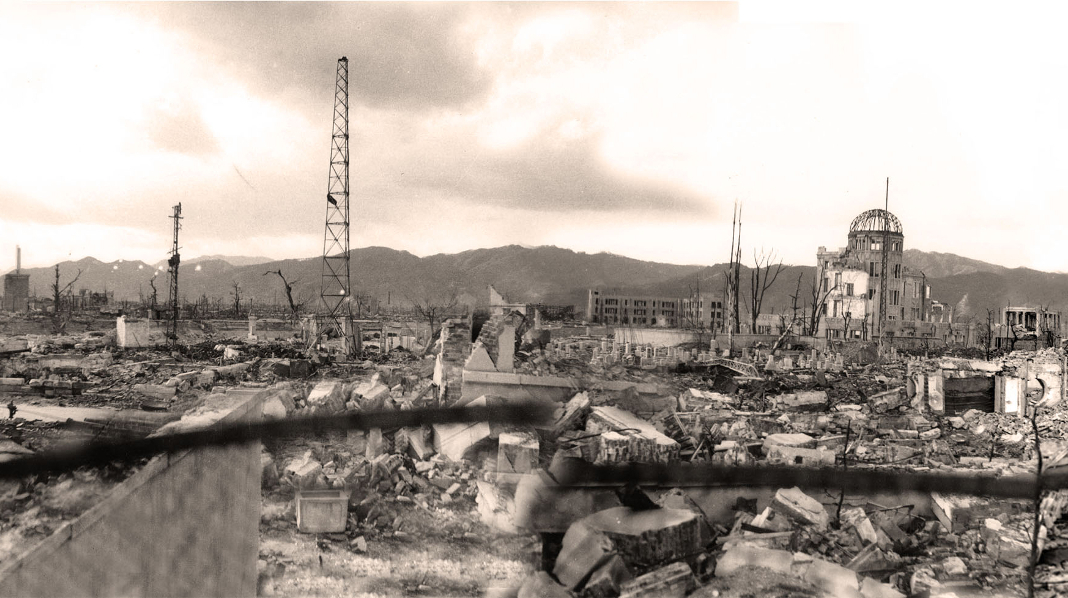
Nuclear weapons are classified as weapons of mass destruction owing to their capacity of unlimited destruction, instant annihilation, and long-term consequences of ionizing radiation.[1] All life on Earth can be destroyed if a sufficient amount of nuclear weapons are used.[2] Besides, radiation from nuclear explosions causes long-term health effects such as cataracts, leukaemia, birth defects, and genetic damage. Although many attempts (General Assembly Resolutions, treaties, national court judgments) have been taken to contain nuclear weapons, there has yet to be a consensus on the legality of the use, threat to use, or even the existence of nuclear weapons themselves. The International Court of Justice (ICJ) has ruled that treaties relating to weapons of mass destruction do not ban recourse to nuclear weapons, and that the international community has yet to produce a treaty that specifically prohibits the use of nuclear weapons.[3] This essay takes the stance that the use of nuclear weapons is not illegal, at least not yet. Instead of focusing on the legality of nuclear weapons, emphasis should be placed on the efforts trying to deter the use and proliferation of nuclear weapons. This essay also supports the principle of deterrence. The first part of the essay will discuss the legality of nuclear weapons. Next, every argument put forth regarding the illegality of the use of nuclear weapons will be disproved. Evaluation of the loopholes in the current regulatory framework will also be carried out. The following part will be a critical analysis on the ethical and moral framework against nuclear weapons. Arguments for nuclear weapons will follow. Lastly, a conclusion will be provided.
Upon request from the UN General Assembly, the ICJ contributed to the international community’s divide over the legality of the use of nuclear weapons and issued an advisory opinion. The conclusion reached was a ‘general’ incompatibility with humanitarian law, and a non liquet on the use of nuclear weapons during self-defence.[4] The ICJ’s non-pronouncement leaves open, the possibility that use of nuclear weapons contrary to humanitarian law might nonetheless be lawful.[5] This is a strange outcome which goes beyond anything claimed by the nuclear-weapon states appearing before the Court, who fully accepted that any lawful threat, or use of nuclear weapons must comply with both the jus ad bellum, and the jus in bello criteria.[6] The current legal regulations available are fragmentary, with several treaties and customary international law covering only certain areas of the issue. Without a comprehensive instrument governing all activities involving nuclear weapons, the relevant laws applicable need to be scrutinised one by one.
Treaties
No single treaty explicitly prohibits the use of nuclear weapons. Hence, numerous treaties circumscribe aspects of the use, acquisition, possession, deployment, and testing of nuclear weapons.
(a) Treaty on the Non-Proliferation of Nuclear Weapons (NPT)
Contracting parties agreed to prohibit the direct or indirect transfer of nuclear weapons bythe ‘haves’(the five), and forbid the receipt, or manufacturing of nuclear weapons bythe ‘have nots’ (states who do not formally possess nuclear weapons).[7] The NPT allows peaceful nuclear testing as long as the information obtained is accessible by non-nuclear weapons states.[8] It also exacts a commitment by contracting states to pursue food faith negotiations towards nuclear disarmament.[9] However, the treaty does not punish or sanction violators of the treaty obligations.[10] This results in problems of non-compliance. In the 1995 NPT extension, the five nuclear powers provided security assurances to refrain from using nuclear weapons against the non-nuclear weapons states, who are parties to the NPT.[11]
(b) Nuclear Weapon-Free Zone
There are various treaties creating nuclear weapons-free zones, such as the Southeast Asia Treaty, Antarctic Treaty, Treaty of Tlatelolco, Treaty of Rarotonga, Outer Space Treaty, and the Seabed Treaty. In these treaties, contracting parties mainly declare their territories as being free from all aspects of nuclear weapons. These include nuclear testing, stockpiling, or the dumping of radioactive waste.[12]
Prohibitions Against the Use of Poison, Poisonous or Asphyxiating Gases
Article 23(a) of the Hague Regulations[13] and the Geneva Gas Protocol[14] prohibits the use of poison, poisonous and asphyxiating gases. Some scholars argued that these treaties should be applied to nuclear weapons because the effects of nuclear explosions are similar to the health effects caused by poison, poisonous and asphyxiating gases.[15] This is because they consider the effects of nuclear explosions and those of poisoned weapons and gases as functional equivalents, therefore, the conclusion that such a prohibition includes nuclear weapons.
Customary International Law and the Laws of War
Customary international law is a body of law which creates legal obligations that are binding on states in their international relations. This body of law derives from various sources: treaties, customs and universally recognised principles of law. Since no treaty specifically prohibits the use of nuclear weapons, and taking into account nuclear policies in states like the UK and the U.S, it is very likely that customary international law does not contain a per se prohibition against nuclear weapons use.[16] Legal scholars rely on positivist notions of state sovereignty, which states that international law will only consist of rules to which states have expressly or implicitly consented to.[17] The laws of war establish restrictions on the conduct of hostilities, and seek to balance the necessities of war with humanitarian principles.[18] These humanitarian principles include:
(a) prohibition against unnecessary suffering
The ICJ defined ‘unnecessary suffering’ as a harm greater than that inevitable to achieve legitimate military objectives.[19] Nuclear weapons are said to violate this principle because their destructive powers cannot be contained either in space, or in time. Furthermore, the radiation released by a nuclear explosion will have negative effects on peoples’ health, agriculture, natural resources and demography.[20] These harms also constitute a serious danger to future generations.[21] The use of nuclear weapons are said to uselessly aggravate the suffering of the enemy, and even civilians, because it involves a force more than necessary to weaken the opponent’s military forces.[22] This argument is strengthened by the fact that a weakening of the enemy forces can be attained using conventional weapons. An opportunity to review such a breach of humanitarian law was presented before the Tokyo District Court. The court, in reviewing the atomic bombings of Hiroshima and Nagasaki, found that the States violated international law because of the use of nuclear weapons which caused unnecessary suffering.[23]
(b) prohibition against indiscriminate attacks
This prohibition is set forth in Article 48 of Additional Protocol I[24], requiring conflicting parties; to distinguish at all times between civilian population and combatants, and between civilian objects and military objectives, and also to direct their operations accordingly against military objectives only. According to Article 51, indiscriminate attacks include the targeting of non-specific military objectives, using means or methods of warfare that are not directed at a specific military target or those that affect areas outside the zone of warfare.[25] A grave breach of the Additional Protocol is a war crime[26] and such breaches will be committed if states engage in indiscriminate attacks against the civilian population, and/or civilian objects. Nuclear weapons are indiscriminate per se, because of the indiscriminate destruction they cause. The radiation resulting from nuclear explosions is uncontrollable and can potentially damage civilians and their properties.
(c) principles of proportionality, distinction, and precaution
The principle of proportionality requires that any incidental loss of civilian lives; injury or damage should not be excessive in relation to the concrete and direct military advantage anticipated. The principle of distinction was first set forth in the St. Petersburg Declaration[27], stating that the weakening of the opponent’s military forces should be the only legitimate objective during war. Hence, the distinction between civilians and combatants, and civilian objects and military objectives must be borne in mind at all times. During war, constant care and precaution must be taken to spare the civilian population and objects to prevent unnecessary suffering.[28] Again, the use of nuclear weapons is argued to fail in distinguishing between combatants and non-combatants because civilians outside war zones might still suffer injuries due to the unpredictable and uncontrollable effects of nuclear explosions. Precaution is difficult because the effect of nuclear weapons cannot be contained in both space, and time. The destruction caused by nuclear explosions is also disproportionate as it inflicts unnecessary suffering upon the opponent, destroy natural resources, and damage the environment.
This section will disprove each of the above argument and provide evidence as to how customary international law in reality, does not prohibit the use of nuclear weapons. Even though nuclear weapons are said to be prohibited per se, there are still ways to circumvent the various legal mechanisms and thus, render their use legal.
The prohibition of unnecessary suffering can be justified by the doctrine of military necessity.[29] States can only weaken their opponent through zones of military operations and hence, non-combatants within those zones knowingly expose themselves and their property to the hazards of warfare. Moreover, the strategic use of nuclear missiles designed for accuracy will lower the possibility of the destruction of an entire civilian population because states can target specific military objects.[30] The likelihood of unnecessary suffering is further reduced when military objects are located in remote areas.
The prohibition on the use of poison, poisonous and asphyxiating gases does not include nuclear weapons. The ICJ ruled that the aforementioned treaties never indicated that nuclear weapons fall within their prohibitions.[31] Furthermore, nuclear weapons destroy their targets instead of poisoning and asphyxiating targeted victims through the diffusion of gases.
The ICJ has ruled that agreements prohibiting the use of nuclear weapons in nuclear-free zones do not negate the fact that nuclear-weapon states reserve the right to use such weapons, particularly in self-defence.[32] While Article 2(4) of the UN Charter refrains states from threatening or using force against other sovereign states, Article 51 allows the use of force as self-defence, subject to the Security Council’s authorisation.[33] During self-defence, states need to adhere to the principles of proportionality and distinction.[34] Hence, states are arguably, allowed to use nuclear weapons in self-defence as long as they satisfy the requirements of necessity and proportionality. Developments in nuclear weapons technology (see above) helped increase the likelihood of states’ complying with Article 51. Although the non-recourse to nuclear weapons for over fifty years may show state practice, the strong adherence to the doctrine of deterrence on the part of the nuclear states indicates a lack of consensus, rendering it insufficient to constitute customary international law. Even if states resort to the NPT, there is no enforcement system to ensure that the ‘obligations’ are followed.
Nuclear weapons are said to be inconsistent with humanity as they threaten the very survival of humanity. The impact of a nuclear explosive blast can cause catastrophic results due to its sudden change in air pressure. Scientific evidence stipulates a considerable change in the world’s climate, possibly lasting for years.[35] Worse still, nuclear war together with a nuclear winter could wipe out most lives in the northern hemisphere, and severely threaten life in the southern hemisphere.[36] Moreover, wind will carry the smoke and dust to countries that are not involved in the war.[37] This causes destruction to the world’s climate, peoples’ health, environment, natural resources, and even the economy. The use of nuclear weapons would also violate the right to life guaranteed by Article 2 of the European Convention of Human Rights.[38] At the substantive level, the provisions of human rights treaties might not add much to international humanitarian law. However, they contain unique mechanisms, relevant to enforcement, that are of great assistance at a procedural level.[39] The ICJ held that warring states need to take environmental considerations into account when assessing the necessary and proportional principles in the pursuit of legitimate military objectives.[40] Such a duty stems from customary law and general treaties on the environment rather than from the specific environmental provisions of the Additional Protocol I.[41]
However, because there is precisely a fear towards the catastrophic effects of the use of nuclear weapons, states will need them to deter any potential aggressors. The doctrine of deterrence is used by the nuclear-weapon states to justify their weapons. The rationale behind this doctrine is that a nation will refrain from attacking another nation which has the ability to inflict unacceptable damage upon it. In other words, the threat of nuclear retaliation will deter potential aggressors. Proponents claim that it is responsible for the fact that there has been no war between the nuclear weapons states.[42] Nuclear technology is something that cannot be reversed. Such technology risks falling into the wrong hands, especially to terrorists. Instead of having detailed debates on ways to synchronize the laws, we should focus on addressing the problems of proliferation.[43] The question is not one of legal authority. Instead of continuing to have wishful thinking, hoping that somehow, shelter will be found from gathering threats, measures should be taken to prevent proliferation. Such a success can be seen in the Proliferation Security Initiative, proving that nuclear proliferation can actually be controlled as long as states can cooperate and work towards the same goal.[44] Unilateral disarmament, as proposed by Jeremy Corbyn, is extremely dangerous as it poses the risk of other nuclear-weapon states using their weapons against the UK. Unless a practical solution is created to ensure that all states disarm (which is highly unlikely), it is overly naive to disarm unilaterally. Instead, precautions should be carried out to prevent accidents from happening at a nuke base.
As a conclusion, there are too many difficulties in trying to come up with a convention or treaty that prohibits the use of nuclear weapons. Even if such conventions or treaties can be created, it is highly doubted that they can effectively safeguard against the use of nuclear weapons (as can be seen in failed efforts of the Kellogg-Briand Pact). Instead, efforts should be put into preventive measures to deter the use of nuclear weapons, and into strengthening the non-proliferation regime. Time should not be wasted in debates concerning the legality of nuclear weapons. This is because, even if such weapons are prohibited, there will be further issues of accountability. What will be the use of holding the belligerents accountable after serious damage has been done? Hence, we should try to focus on practical solutions of non-proliferation and try to deter the use of nuclear weapons. Nuclear-weapon states should also think carefully before using their weapons to prevent catastrophic consequences. No room will be left for regret when irreversible damage is done. To quote Hayao Miyazaki, ‘no matter how many weapons you have, no matter how great your technology might be, the world cannot live without love’.
Bibliography
Books
Bailey K, Strengthening Nuclear Non-Proliferation (Westview Press 1993)
Brierly J, The Law of Nations (Humphrey Waldock ed, 6th edn, 1963)
Shaw M, Nuclear Weapons and International Law (Dartmouth Publishing1987)
Schwarzenberger G, International Law as applied by International Courts and Tribunals, Vol 2 (Stevens & Sons Ltd1968)
Yost D, France’s Nuclear Dilemmas (Standford University Press 1996)
International Legislation
Additional Protocol I & II
European Convention of Human Rights
Geneva Conventions
Geneva Gas Protocol
Hague Regulations
International Committee of the Red Cross
St. Petersburg Declaration
UN Charter
UNGA Res 3472B (1975) UN Doc A/10441
UNSC Res 984 (1995) SCOR Resolution 984
Journal Articles
Bolton J, ‘The Bush Administration’s Forward Strategy for Non-Proliferation’ (2005) 5(2) Chi J Int’L 395
Bugnion F, ‘The International Committee of the Red Cross and nuclear weapons: From Hiroshima to the dawn of the 21st century’ (2005) 87(859) International Review of The Red Cross 511
Çetiner Y, ‘Is Nuclear Deterrence Morally Acceptable?’ (1998) 3(1) Journal of International Affairs
Greenwood C, ‘The Advisory Opinion on nuclear weapons and the contribution of the International Court to international humanitarian law’ (1997) 316 International Review of the Red Cross
Grief M, ‘Legality of the Threat or Use of Nuclear Weapons’ (1997) 46 INT’L & COMP LQ 681
Moore J, ‘Nuclear Weapons and the Law: Enhancing Strategic Stability’ (1983) 9 Brook J Int’l L 263
Sagan C, ‘Nuclear War and Climatic Catastrophe: Some Policy Implications’, in Lester Grinspoon, The Long Darkness: Psychological and Moral Perspectives on Nuclear Winter (New York 1986)
Sheldon J, ‘Nuclear Weapons and the Laws of War: Does Customary International Law Prohibit the use of Nuclear Weapons in all Circumstances?’ (1996) 20(1) Fordham International Law Journal 5
Weston B, ‘Nuclear Weapons versus International Law: A Contextual Reassessment’ (1984) U.S. Air Force publication Special Edition No. 1094
Reports/Opinions
R.F. Bacon, ‘Seizing the Strategic Baton’ (1992) US Naval Institue Proceedings
ICJ Advisory Opinion on the Legality of the Threat or Use of Nuclear Weapons, 1996
Judge Higgins, Threat or Use of Nuclear Weapons [1996] Dissenting Opinion
Table of cases
Military and Paramilitary Activities [1986] ICJ 1 176
Shimoda v. State (Japanese Government) [1964] Tokyo Dist. Ct
Treaties
Treaty on the Non-Proliferation of Nuclear Weapons [1968]
Websites
UNODA, ‘Nuclear Weapons’
<http://www.un.org/disarmament/WMD/Nuclear/>
Footnotes
[1] François Bugnion, ‘The International Committee of the Red Cross and nuclear weapons: From Hiroshima to the dawn of the 21st century’ (2005) 87(859) International Review of The Red Cross 511.
[2] UNODA, ‘Nuclear Weapons’ <http://www.un.org/disarmament/WMD/Nuclear/> accessed 9 January 2016.
[3] ICJ Advisory Opinion on the Legality of the Threat or Use of Nuclear Weapons, 1996.
[4] Ibid.
[5] Threat or Use of Nuclear Weapons [1996] Dissenting Opinion of Judge Higgins.
[6] Ibid.
[7] Treaty on the Non-Proliferation of Nuclear Weapons [1968], Articles I & II.
[8] Ibid, Articles IV & V.
[9] Ibid, Article VI.
[10] Kathleen C. Bailey, Strengthening Nuclear Non-Proliferation (Westview Press 1993).
[11] UNSC Res 984 (1995) SCOR Resolution 984.
[12] UNGA Res 3472B (1975) UN Doc A/10441.
[13] Hague Regulations, Article 23.
[14] Geneva Gas Protocol.
[15] Malcolm N. Shaw, Nuclear Weapons and International Law (Dartmouth Publishing1987).
[16] John Norton Moore, ‘Nuclear Weapons and the Law: Enhancing Strategic Stability’ (1983) 9 Brook J Int’l L 263.
[17] James L. Brierly, The Law of Nations (Humphrey Waldock ed, 6th edn, 1963).
[18] Georg Schwarzenberger, International Law as applied by International Courts and Tribunals, Vol 2 (Stevens & Sons Ltd1968).
[19] Ibid (n 3).
[20] Ibid (n 3).
[21] Ibid
[22] Nicholas Grief, ‘Legality of the Threat or Use of Nuclear Weapons’ (1997) 46 INT’L & COMP LQ 681.
[23] Shimoda v. State (Japanese Government) [1964] Tokyo Dist. Ct.
[24] Additional Protocol I, Article 48.
[25] Ibid, Article 51.
[26] David S. Yost, France’s Nuclear Dilemmas (Standford University Press 1996) 108.
[27]St. Petersburg Declaration, Preamble.
[28] ICRC Cil, Rule 15.
[29] Burns H. Weston, ‘Nuclear Weapons versus International Law: A Contextual Reassessment’ (1984) U.S. Air Force publication Special Edition No. 1094.
[30] R.F. Bacon, ‘Seizing the Strategic Baton’ (1992) US Naval Institue Proceedings.
[31] Ibid (n 3).
[32] Ibid (n 3).
[33] UN Charter, Articles 2(4) & 51.
[34] Military and Paramilitary Activities [1986] ICJ 1 176.
[35] Y. Turan Çetiner, ‘Is Nuclear Deterrence Morally Acceptable?’ (1998) 3(1) Journal of International Affairs.
[36] Ibid.
[37] Carl Sagan, ‘Nuclear War and Climatic Catastrophe: Some Policy Implications’, in Lester Grinspoon, The Long Darkness: Psychological and Moral Perspectives on Nuclear Winter (New York 1986).
[38] European Convention of Human Rights, Article 2.
[39] Christopher Greenwood, ‘The Advisory Opinion on nuclear weapons and the contribution of the International Court to international humanitarian law’ (1997) 316 International Review of the Red Cross.
[40] Ibid.
[41] Ibid.
[42] Jill M. Sheldon, ‘Nuclear Weapons and the Laws of War: Does Customary International Law Prohibit the use of Nuclear Weapons in all Circumstances?’ (1996) 20(1) Fordham International Law Journal 5.
[43] John R. Bolton, ‘The Bush Administration’s Forward Strategy for Non-Proliferation’ (2005) 5(2) Chi J Int’L 395.
[44] Ibid.
 Paradoxes and Prejudices - Legal